The Magic Mirror
You can't see yourself riding. That's not a failing — it's how riding works.
What you feel is what you think you're doing. The only way to know what you actually did is to watch it play back.
A student called me her magic mirror on the wall years ago, in the middle of a lesson. The name stuck, because that's the job: showing a rider what their body is actually saying, as opposed to what they believe it's saying.
What you'll probably find
Most riders are surprised by the same thing: their horse was answering correctly. The message just wasn't the one they meant to send.
A leg that's on when it should be off. A rein activating before the seat has asked for anything. A seat bone quietly saying the opposite of what the leg is asking — and the horse hears the seat first, every time.
None of that is carelessness, and none of it is the horse being difficult. It's timing. Timing can be practiced, and timing can be improved.
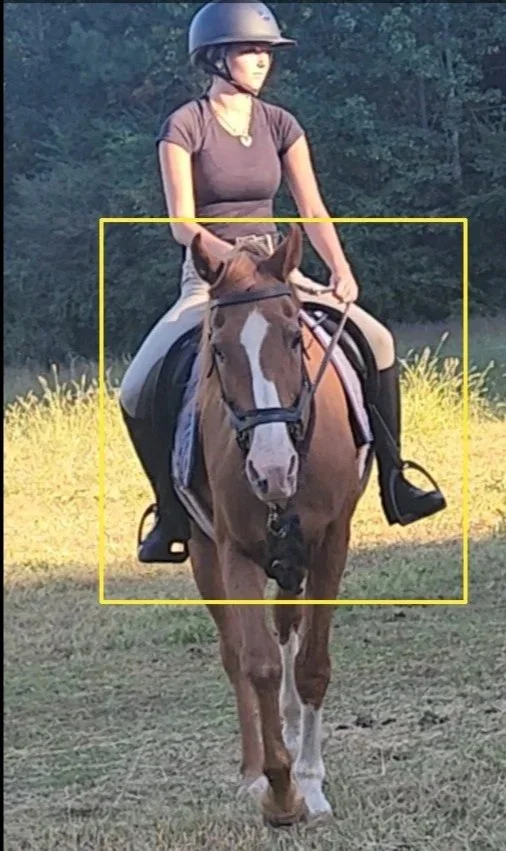
Look at the yellow box. Rider’s right hip has dropped and her right calf is on. Her left rein is pulling. Tracer is dead straight, because he's been handed two directions at once. Which are the correct aids, supporting his balance and biomechanics? Which way does he turn?
Three ways to work together
Whichever you choose, you don't need to have read the book. Everything gets explained as we go.
Magic Mirror — $85*
$75 if you're happy for me to teach from your footage — see below
Your footage, diagnosed and sent back to you.
Slowed down frame by frame, annotated where it helps, with my voice walking you through what your aids said and what your horse heard. Then the one small change that makes the biggest difference to you and your horse.
Annotated video with voiceover
What's actually happening, and why your horse responded that way
One specific thing to practice before you film again
Back to you within five days
Work on your own timeline. No scheduling, no time zones.
Magic Mirror Live — $150
Sixty minutes together, looking at your riding side by side.
You send footage ahead; I watch it before we meet. Then we go through it in real time — I can slow it down, draw on it, and answer the questions that come up as you watch yourself.
Everything in the Magic Mirror, plus:
Sixty minutes of live coaching
A written action plan you can take to the barn
One follow-up email for the questions that arrive later
Three Live Sessions — $375 (Save $75 )
For riders who want this to actually change.
Three sixty-minute sessions, scheduled as you need them across three months. Saves $75 against booking separately.
One diagnosis tells you what's happening. Three sessions tell you whether it's shifting — and gives your horse time to trust the new conversation, which usually takes a few consistent tries.
Three Live sessions, yours to schedule
Progress tracked across all three
Ongoing support between sessions
What to send me
Two to five minutes of riding. Walk and trot is plenty to start — or whatever feels like the sticking point between you and your horse. Advanced riders may be pleasantly surprised at the improvement in their timing as well.
Any angle. From the side, from behind, or head-on. Each tells a different part of the story, and all three together tell the clearest.
Phone video is fine. It doesn't need to be professional footage. It needs to be honest footage.
Tell me what's been frustrating you, in your own words.
MP4, MOV, or a YouTube or Vimeo link all work.
Why this diagnosis and not another opinion
I've been a certified riding instructor since 1995. I read the manuals, audited the clinics, took the lessons, and served three terms as president of a USDF Group Member Organization. After nearly thirty years of that, I concluded something uncomfortable: not one riding manual in print tells a rider what their seat bones should do on the horse's beats.
So what gets taught instead is sit deep. Soft hands. Find the feel. None of it can be checked. A rider can't tell whether she did it, an instructor can't tell her what to change, and the horse pays for the gap.
Save Our Seat names things that can be counted. Direct contact is sustained; indirect is pulsing. The walk is four beats, the trot two, the canter three. The seat bones speak in dots and dashes timed to those beats. Every one of those is something you can point at on a screen and say: there, that one, at that moment.
That's what makes this a diagnosis rather than an opinion. Frame by frame, named, and checkable — by you, against your own footage, whether or not you take my word for anything.
A note on privacy
Every diagnosis is yours. Nothing is shared, posted, or used for teaching without your written permission.
*If you're happy for me to teach from your footage, say so when you book and I'll take $10 off — riders learn more from watching other riders than from any explanation I could write, and your horse's honest answers help someone else's horse.
Christi Costigan — ARIA-certified riding instructor since 1995, author of Save Our Seat: The Morse Code of Horse Riding.
Transforming horse-rider communication since 2005.
This is riding instruction in the clear use of the natural aids, delivered through video analysis. Working from footage means I can't assess your tack, your footing, or your horse's soundness, and nothing here is veterinary or medical advice. Ride safely and use your own judgment about what's appropriate for you and your horse.